Tuesday, November 30, 2021

 A Problem with Aircraft Braking Systems

    One of the most crucial and important times during a flight is when you touch down at your final destination. This is why the braking system of these commercial aircraft is so pivotal, and cannot be neglected because it can be the focal point of a disaster that is just waiting to happen. The leading reason for failure of braking systems in these aircraft is hydraulic fluid leaks, whether that be externally or internally started, will start to introduce air into the system as well. The pilot will start to feel the brake become more spongy as this system leaks more and more fluid out, until if not found and fixed, causes complete loss of braking control. One of the leading causes for external leaks is the degradation of flexible rubber hose lines, which start to disintegrate because of the corrosive nature that hydro fluid has."Most hydraulic hoses should be replaced every five years. As these hoses age, they can deteriorate from the inside. Small pieces of rubber can flake off and contaminate the system." (Simon, 2015). When this progresses, it usually is started from the inner portion of the hose so you have no idea that it is deteriorating until that same hose ruptures or explodes due to extremely high psi and causes a mishap. Hard lines have some big issues as well, namely corrosion, cracks, wear and fatigue. This is why you always have to pay close attention when inspecting these types of hard lines both during pre flight and post flight. The same goes for aluminum hard lines because they tend to flex and move around during landing, which over time can end up in metal fatigue and failure under pressure. 

Common Causes of Hydraulic Hose Failure | MAC Hydraulics


My fix for this problem is to use Stainless Steel braided lines for the brake system. This would alleviate the issue of using rubber or synthetic material that will no doubt deteriorate in a short amount of time, as well as throwing out the chance that a hard line can fail due to the movement and stress they get put under which can end up in failure more times then not. The Stainless Steel braided lines are like the best of both worlds because they are flexible, durable, can be flared to whatever size is needed, and have a coating that will last longer against the corrosion and wear problems that normal hard lines have. Maintenance costs may be a little bit more to switch out the whole system at first, but the down time and man hours you would save in the long run would essentially make it worth the initial investment because you get more bang for your buck and the aircraft is not down for maintenance as much because of the standard issues. What do you think? 
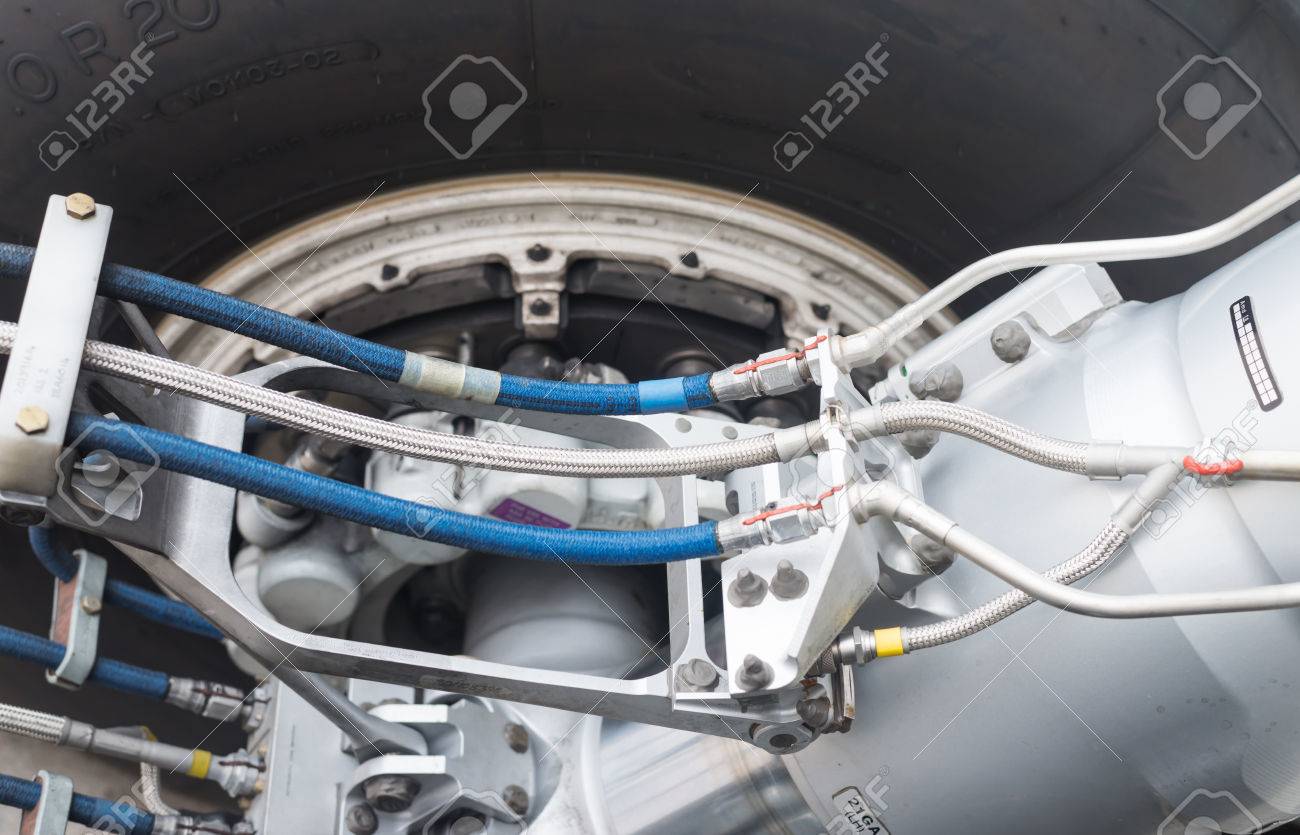
Thailand - June 2015 : Airbus, Aircraft Hydraulic Brake Line, Soft Focus  Stock Photo, Picture And Royalty Free Image. Image 42240501.


Source: 

Jeff Simon, 2015. Aircraft Maintenance: Beware Common Points of Failure on Brakes. Brake System Basics and Maintenance, Part 2. Retrieved from: 

https://www.aopa.org/news-and-media/all-news/2015/september/22/aircraft-maintenance-brakes-common-points-of-failure


Tuesday, November 23, 2021

 Increasing Propeller Engine Performance at Higher Altitudes.

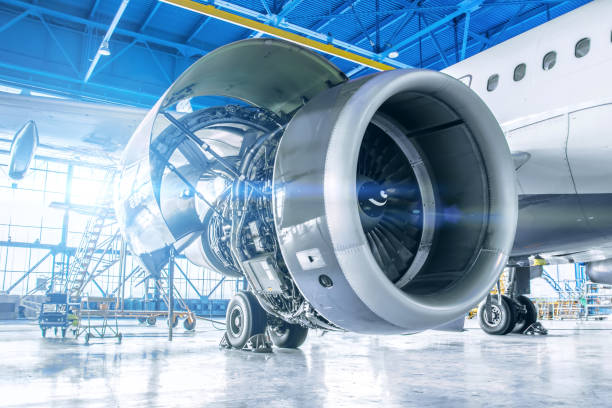
Altitude believe it or not has a huge affect on how the aircraft engine performs. How you might ask? Well it is because the less dense and cooler the outside air is, the more efficient these turbine engines become. Propeller engines are the opposite, they do not perform well at higher altitudes because of their construction and operating flaws, which I will go into shortly. Airflow is the biggest factor in engine performance, this is why these Turbine engines need a ton of good airflow for combustion as well as for secondary air used in cooling the engines internals as well as aircraft systems. 

Aircraft engine | Gas turbine, Jet engine, Aircraft engine

Turboprop Engine Types

Now you would not want to try and fly a turbo prop aircraft at higher altitudes because they are not as efficient as their turbine engine counterparts."The piston or reciprocating engine, with all of its moving parts, must convert the thermal energy into mechanical energy and then finally into thrust by rotating a propeller." (FAA, n.d.) I think that the way to improve efficiency for Turboprop engines at high altitude would be to convert or upgrade some of the engine technology to match that of the Turbine engine applications. Primarily I would incorporate a bigger Core Compressor that can efficiently convert airflow into compressed air more effectively to increase thrust. Another thing I would do would be to add a fan type propeller system like you would see on a high bypass turbo fan engine with around 12-20 blades as opposed to 5 or 6 like you would normally see. This can allow you to get more thrust efficiency from your engine because you are not relying on blade angle and manifold pressure to gain your power. Alternatively, doing this would get rid of that factor and you could focus on improving internal components that will let you gain your thrust and power through pure RPM and ITT (Internal Turbine Temperature). That is where the bigger, more efficient Core comes into play, as well as using better materials in your High Pressure Compressor such as Ceramic blades that maintain a more cooler temperature which aids in engine performance and power.  Along with that, I would add a more efficient heat exchanger that would effectively cool the fuel and heat the oil better at these higher altitudes to prevent the fuel from developing ice crystals in the system. Finally, being able to upgrade some of the components and systems will allow you to fly longer distances with less stress on the engine because of the cooler, less dense air that is used at much higher altitudes, which increases the overall thermal efficiency of the engine. The only issue with flying at such increased altitudes is the reduction in ability to maneuver, so it is always smarter to find a good middle ground where you have some maneuverability as well as engine performance. What are your thoughts? And what would you do to improve something like this? 

Turboprop engine repairs, for less - AOPA

Source:

FAA.gov, n.d. Transition to Jet-Powered Airplanes. Federal Aviation Administration. Retrieved from: Transition to Jet-Powered Airplanes - Federal Aviation Administrationhttps://www.faa.gov › aviation › media › 17_afh_ch15


Wednesday, November 17, 2021

ETHICS IN AVIATION


13,099 Aircraft Maintenance Stock Photos, Pictures & Royalty-Free Images -  iStock

Ethics defined by Merriam-Webster states that it is "the discipline dealing with what is good and bad and with moral duty and obligation." Now expanding on this idea and concept for the aviation industry is something that is very common because ethics are such an important thing for any business, especially aviation. What I think is a good working definition for ethics in aviation is that of doing the right thing all the time no matter what comes of the outcome. "Fear, guilt, and our own self-interests can prevent us from doing the ethical thing." (Zuehlke, 2005). This means that we naturally have these thoughts in the back of our mind, to which we need to overcome these obstacles to be the best we can be, not only for ourselves, but for those people that rely on you doing the right thing to make the aircraft safe for them to travel on. This can range from the maintenance technician inspecting and fixing the aircraft properly without taking any shortcuts, to the pilot double and triple checking everything before, during, and after the flight to make sure the plane maintains serviceability and can safely travel to where they need to go. To me, ethical decision making is one of the more important skills that is absolutely necessary to anyone wanting to be in this industry. If you have a lapse in ethical decision making, it could mean disaster or harm to many innocent people.  What are your thoughts?


Source: Barb Zuehlke, 2005. Ethics: Why it's Important. Retrieved from:

https://www.aviationpros.com/home/article/10385713/ethics-why-its-important (Links to an external site.)


 ALL HAIL BREAKS LOOSE When I think of a type of weather event that could be potentially catastrophic for an aircraft, the obvious choice I ...