Wednesday, December 29, 2021

 Air Traffic Control Automation

Automation systems for ATC's are very pivotal because they allow the Air Traffic Controller to focus on more important tasks at hand, and less about the smaller things. Automation are used to enhance communications with the pilots, get more accurate information at an earlier and more streamlined time, as well as enhancing full visibility of what is going on all around the airport at any given moment."Communication, navigation and surveillance tools help ATC controllers to fulfil their primary responsibility of preventing collisions between aircraft." (Baker, 2018). This helps in the human factor area in the job of ATC's, being that they aren't being stretched thin by such high workloads, and they have these systems that act as a live feed surveillance that they can see the whole view of the airport in real time, while also having radar tags on aircraft to make sure that everything is operating how it should be. These systems are also very pivotal when it comes to helping multiple aircraft taxi to and from the runways at night. They can use these systems to figure out the most optimal route for each aircraft to take while at the same time making sure that no two aircraft are headed down the same taxiway at the same time. 


Reference: 

Joe Baker, 2018. The Role of Automation in Air Traffic Control. Airport-Technology.com. Retrieved from: automation-air-traffic-control


Wednesday, December 15, 2021

 Human Factors in Aviation


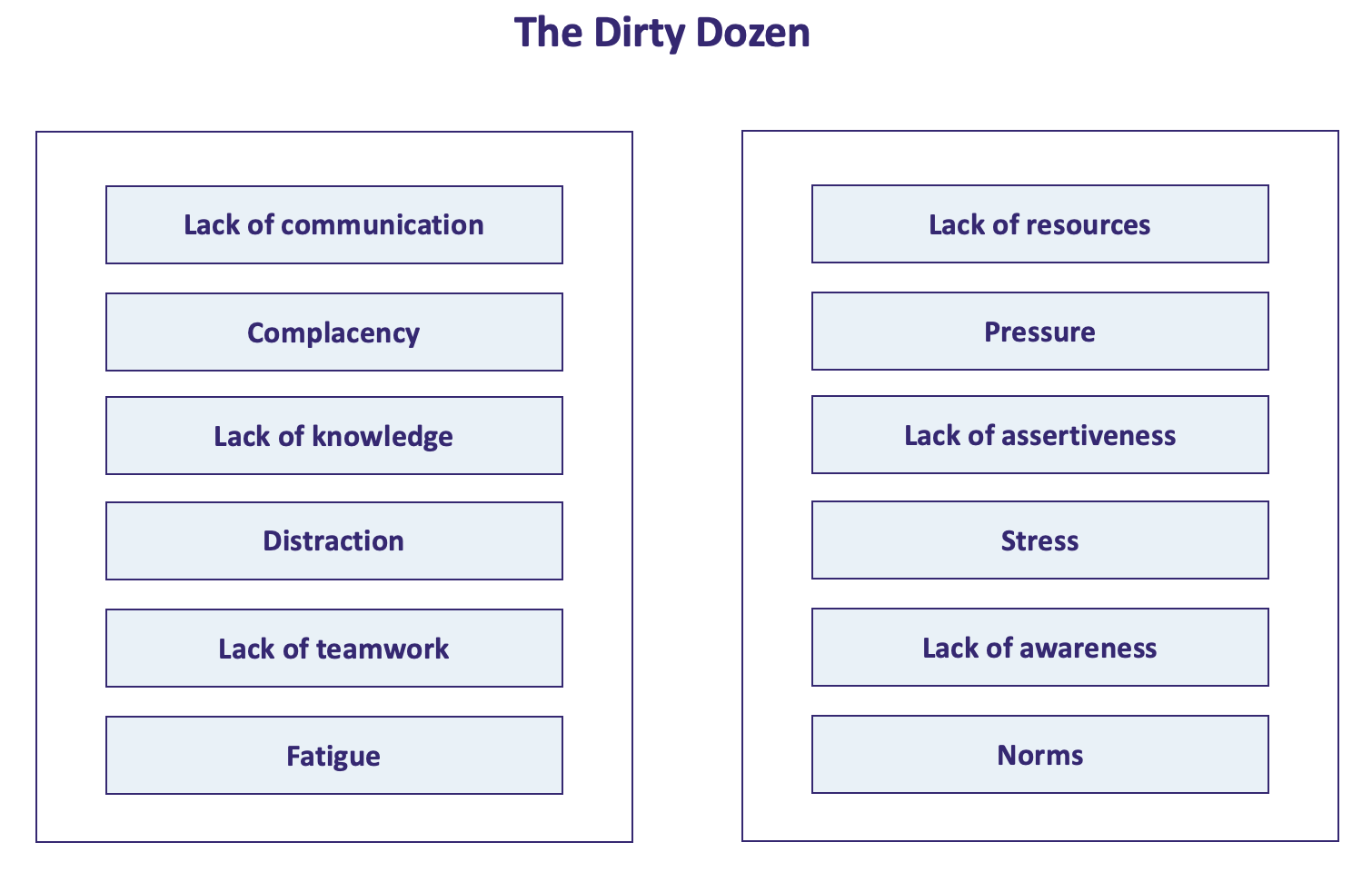
When I think of Human Factors in the Aviation industry, what comes to mind is how these mental and physical barriers can prevent you and your co workers from getting the job done efficiently and correctly. So my working definition of Human Factors is; Anything physical, or mental that can cause lapse in concentration or judgement which will lead to damage or injury to you or others around you. On the aspect of how human factors can affect how certain jobs get done in your workplace, changing a turbine engine to me seems like something that has a high rate of risk and possible harm that can be done. This is a task which you will never do by yourself, or at least you shouldn't be trying to attempt something like this by yourself. There are many things that can go wrong when removing or installing an engine into the aircraft. This is why it is paramount that you or your co-workers do not have or show any of the traits that they call part of "The Dirty Dozen." What are the dirty dozen human factors? - DMD Solutions


Definitely one of the bigger challenges to deal with when removing and installing engines is complacency and lack of awareness. When you do a task so many times, complacency kicks in and you tend to want to take shortcuts or tend to not look at the tech data as much when doing this task, which can lead to harsh consequences. Lack of awareness is the other big challenge because most people when they are jobbing out, they tend to zone out or get tunnel vision on the task at hand and may not be aware that something bad is about to happen that can cause an injury or damage the aircraft/engine. These two, amongst other problems are the reason why engine work can be stressful and nerve racking sometimes. 


Reference:

FAA, n.d. Human Factors. Federal Aviation Administration. Retrieved from: 

https://www.faasafety.gov/files/gslac/courses/content/258/1097/AMT_Handbook_Addendum_Human_Factors.pdf


Tuesday, December 7, 2021

 TSA's Crew Vetting Process 

TSA can be really strict when it comes to being a passenger on one of their aircraft, and who wouldn't be after the tragic events that happened on September 11, 2001. Since then, airlines have become a lot more protective with these flights, employing more federal Air Marshals, and arming the pilots as well as strengthening the cockpit doors to prevent entry for hijacking. Crew Vetting is one of the more important things to do when finding employees to operate your planes. Layers of security can be used to mitigate the threat of an insider attack by being extremely thorough with their hiring process and picking only the best of the best candidate for the job. "TSA receives individual flight crew manifests  from CBP via the secure DHS network and conducts a security threat assessment by running each name on the manifest against law enforcement, immigration, terrorist-related, and intelligence data sources, as well as against the Master Crew List established and maintained by TSA." (Dean, 2004). Once you pass this assessment, you will be added to the Flight Crew Manifest, which then means you are given the good to go on being part of the air crew. This just seems like your standard background check, but just a little bit more in depth because of the terrorist threats and hijackings that had happened previously. I think the layers of security that are currently in place are fairly basic, but do work substantially well for what they are supposed to do. The only way I could see to improve these security layers would be to deep dive into all their credentials and past experience, as well as be more strict when it comes to run in's with law enforcement such as DUI's and other misdemeanors. I believe it should be like the military when it comes to clearance to be part of the air crew, meaning that you should have to get the go ahead from the owners of the company before you are hired if you have previous charges with law enforcement. On top of that, I believe that they should interview and ask all your immediate family members a series of questions to make sure you are a person of good standing and character, also making sure that you are who you say you are. What are your thoughts? 

Previously undisclosed TSA program tracks unsuspecting passengers

Sources: 

Lisa Dean, 2004. Privacy Impact for Crew Vetting Program. Retrieved from: https://www.dhs.gov/sites/default/files/publications/privacy_pia_cvp_2004.pdf


 ALL HAIL BREAKS LOOSE When I think of a type of weather event that could be potentially catastrophic for an aircraft, the obvious choice I ...